If you’ve ever looked at solar panels on a rooftop and wondered, “How does all of this actually work?”, you’re not alone.
The basic idea is simpler than it might seem. Solar panels capture energy from the sun and convert it into electricity your home can use. An inverter converts that electricity into a form your home can use, while your electrical system directs it where it’s needed.
When your solar system isn’t producing enough electricity, your home can draw power from the grid. If you add battery storage, you can also store your overproduced power.
Here’s how it all works together.
Solar Panels Capture Energy From the Sun
The process starts with your solar panels. Solar panels contain photovoltaic cells that convert sunlight into direct current (DC) electricity. When sunlight hits these cells, it creates an electrical current that is captured and used by your home.
Your panels will still produce electricity on cloudy days, although production is generally lower than on a bright, sunny day.
How much electricity your panels produce depends on factors such as the amount of sunlight your property receives, the orientation and pitch of your roof, shading, and the size of your solar system.
If you’re wondering whether your own property is a good candidate for solar, take a look at our guide to whether your home is ready for solar.
The Inverter Makes Solar Electricity Usable
The electricity produced by your solar panels is direct current (DC) electricity. Your home’s appliances and electrical system use alternating current (AC).
That’s where the solar inverter comes in.
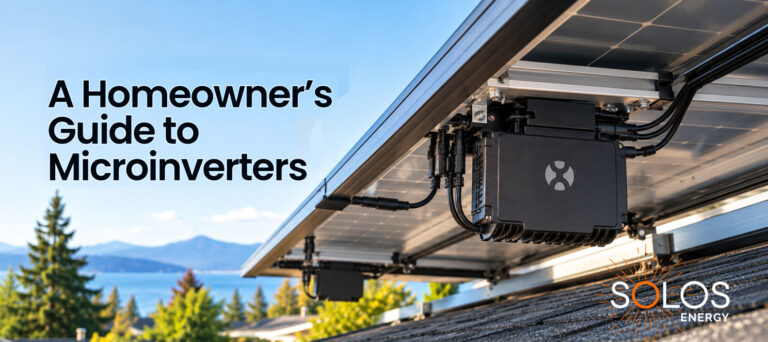
The inverter converts the electricity generated by your panels from DC into AC electricity that your home can use.
Once the electricity has been converted, it can flow into your home’s electrical system and be used just like electricity from the grid.
Your Home Uses the Solar Energy You Produce
Your solar electricity can help power the things you use every day, including lights, appliances, heating and cooling systems, EV chargers, heat pumps, and other electrical loads in your home.
When your solar system is producing electricity while you’re using energy, your home will use that solar power directly.
For example, if your panels are producing electricity in the afternoon while your heat pump, appliances, or EV charger are running, the solar energy your system generates will help power those loads.
How much solar electricity your home can produce depends on the size and design of your system, as well as your property’s specific conditions. If you’re curious about how system size is determined, read What Size Solar System Do I Need? A BC Homeowner’s Guide.
Your home doesn’t need to use every bit of solar electricity at the exact moment it’s produced. What happens to the excess depends on your system and utility connection.
What Happens When You Produce More Electricity Than You Need?
Your home’s energy use changes throughout the day.
There may be times when your solar panels are producing more electricity than your home is using. When that happens, excess electricity will be sent to the electrical grid.
BC Hydro’s self-generation program has changed for new participants in 2026. If you’re considering solar in BC, our guide to BC Hydro’s Self-Generation Program changes explains what the changes mean for future solar customers.
Your solar system doesn’t have to produce exactly the amount of electricity your home needs at every moment. Instead, your home can use solar energy when it’s available and interact with the grid when your production and electricity use don’t match.
What Happens When You Need More Electricity Than Your Solar System Produces?
Solar panels only generate electricity when there’s daylight.
At night, for example, your panels aren’t producing energy. Production can also be lower during periods of heavy cloud cover or at certain times of the year.
When your home needs more electricity than your solar system is producing, you can draw electricity from the grid.
For a typical grid-connected home, this means your energy supply can change throughout the day. Solar energy can help power your home when your panels are producing, while the grid provides electricity when additional energy is needed.
Where Does Battery Storage Fit In?
Battery storage gives you another way to manage the electricity your solar system produces.
Instead of sending all of your excess solar energy to the grid, a battery can store some of that energy for later use.
For example, your panels may produce plenty of electricity during the afternoon when your household is using relatively little energy. A battery can store some of that excess energy so it can be used later, such as in the evening when solar production has dropped.
Battery storage can also provide backup power during an outage when installed and configured for backup operation.
It’s important to note that a standard grid-connected solar system does not automatically provide power during an outage. A properly configured battery backup system can allow your home to continue receiving power when the grid goes down. You can learn more about how this works in our article on grid-tied solar systems with battery backup.
Whether a battery makes sense for your home depends on your energy use, goals, and the design of your solar system.
How Solos Energy Can Help
Every home uses electricity differently, which is why solar systems aren’t one-size-fits-all.
At Solos Energy, we look at your home’s electricity use, property, roof, and energy goals to design a system around how you actually use power.
Whether you’re interested in solar panels alone or are considering adding battery storage, we’ll help you understand your options and find an approach that makes sense for your home.
Ready to explore solar for your home? Book a free consultation with our team.
Frequently Asked Questions
Do solar panels work on cloudy days?
Yes. Solar panels can still generate electricity when it’s cloudy, although they generally produce less energy than on a sunny day. The amount of electricity produced depends on the amount of sunlight available.
Do I still need the electrical grid if I have solar?
For most grid-connected homes, yes. Your home can use solar energy when it’s available and draw electricity from the grid when your solar system isn’t producing enough to meet your needs.
Do solar panels work at night?
No. Solar panels need daylight to generate electricity. At night, a grid-connected home can draw electricity from the grid, or a battery can provide stored energy if the system includes battery storage.
Can solar panels power my home during a power outage?
Not necessarily. A standard grid-connected solar system shuts down during a power outage for safety reasons. A solar system paired with appropriately configured battery storage will provide backup power during an outage, depending on the system design.