What Is a Microinverter?
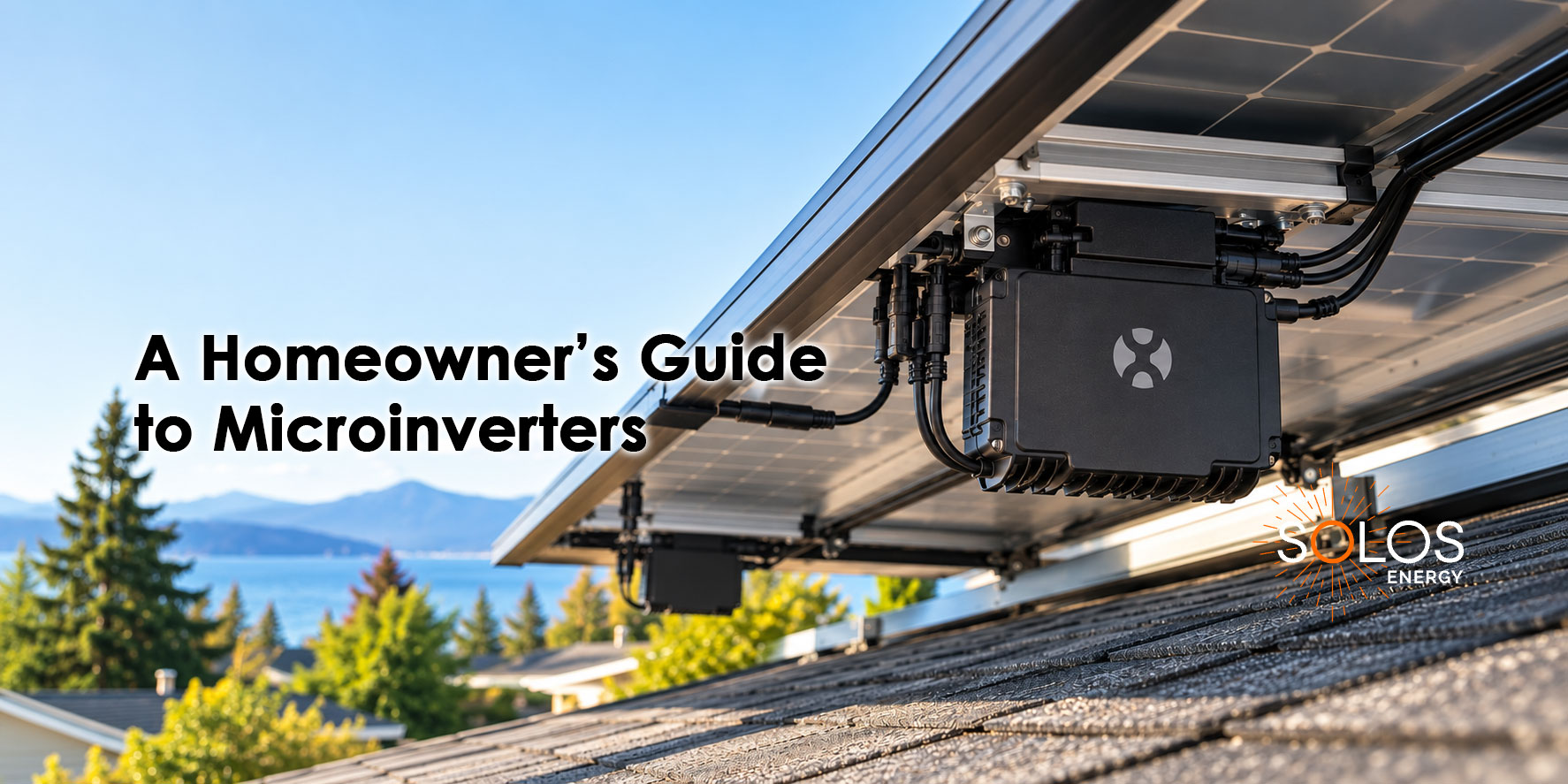
Every solar panel generates electricity as direct current (DC), but household appliances run on alternating current (AC). A microinverter handles that conversion right on the roof, rather than sending the electricity to a central inverter elsewhere in the system.
Solos uses APsystems DS3-L and QS2 microinverters in residential installations. Both have independent tracking for each connected panel, allowing them to operate separately.
In a traditional string inverter setup, several panels are connected in a series and work together as part of one electrical circuit. Microinverters take a different approach, managing the output of individual panels.
This can make a difference when conditions vary across the roof. For example, if a tree shades one section in the afternoon, the affected panels can produce less without necessarily reducing the output of the rest of the array.
Why microinverters matter:
- They help limit the impact of shading or reduced performance on individual panels.
- They allow panel-level monitoring, so homeowners and their solar installation company can see how individual panels are performing.
- They can make it easier to identify changes in production or potential equipment issues.
- They are often backed by longer warranties than traditional string inverters.
Microinverters can be particularly useful on roofs where panels face different directions or experience partial shading from trees, chimneys or nearby buildings.
How Microinverters Work
The process is relatively straightforward:
- Solar panels absorb sunlight and generate direct current (DC) electricity.
- The microinverters convert that electricity into alternating current (AC) directly at the panels.
- The AC electricity travels through the home’s electrical wiring to the electrical panel, where it can be used to power appliances, lighting and other household equipment.
- A monitoring platform collects production data, allowing homeowners to track how their solar system is performing.
Because the conversion happens at the panel level, each microinverter manages its connected panel or panels independently. This gives the system more flexibility when roof conditions vary across the array.
Monitoring Your Solar System
One of the advantages of microinverters is the ability to monitor individual panel performance.
APsystems provides a monitoring platform that allows homeowners and their solar installation company to check system production and see how individual panels are performing. This makes it easier to spot changes in output and identify potential issues.
At Solos, monitoring is also part of our ongoing support. Our Project Manager reviews system performance and reaches out to customers if something appears unusual or needs attention.
Is a Microinverter System Right for Your Home?
Microinverters offer an effective way to improve system flexibility, limit the impact of shading on individual panels and provide detailed insight into solar production. For homes with more complex roof layouts or changing sunlight conditions, they can be particularly valuable.
Like any solar installation, long-term performance depends on choosing the right equipment, careful system design and professional installation. When these elements come together, a well-designed solar system can provide reliable energy for decades.
At Solos Energy, we take the time to assess each property and design a system around its specific needs. Request a free consultation to find out what solar could look like for your home.