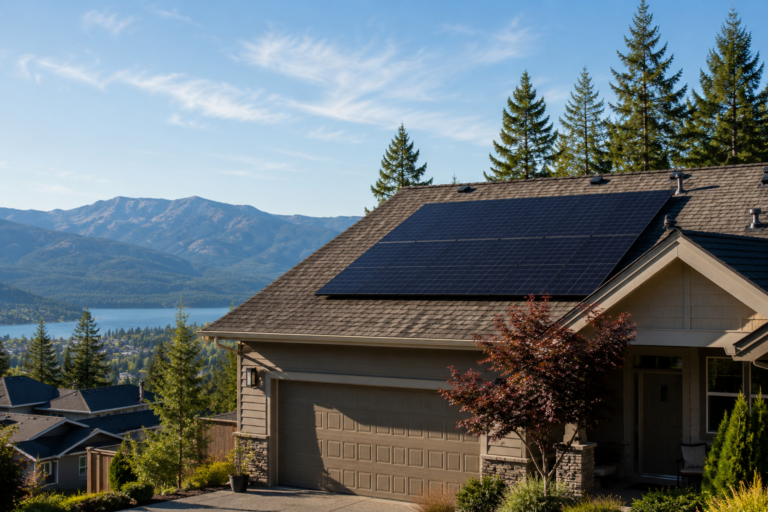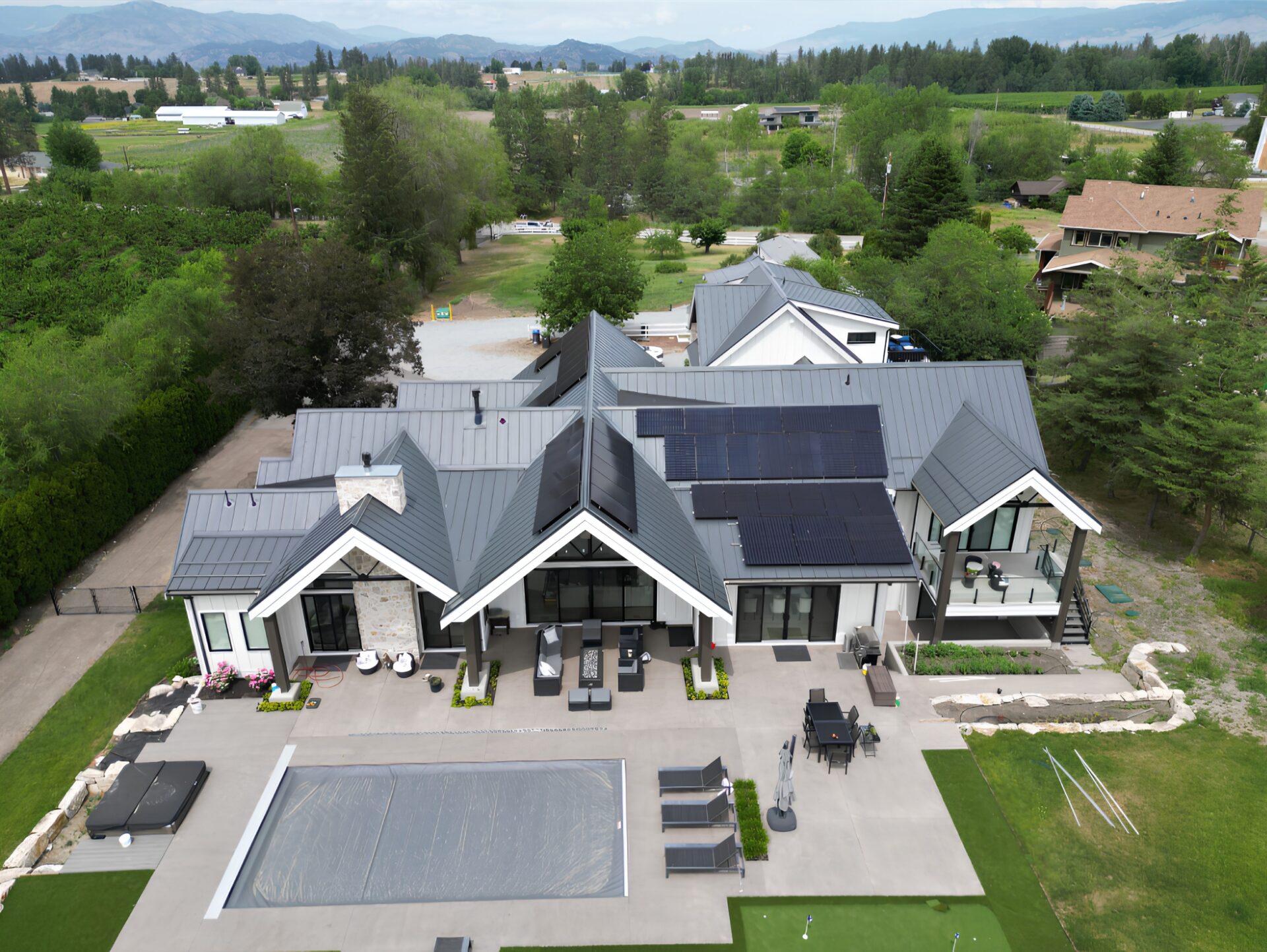
If you live on an acreage or rural property in the Okanagan, solar may look a little different than it does in town.
You may have more roof space to work with, or none at all, if your buildings weren’t built with solar in mind. You may be further from the grid, dealing with outages more often, or running equipment a typical city home never has to think about: well pumps, irrigation, workshops, barns, or a second residence on the property.
All of that changes how a solar system should be designed. Here’s what to consider if you’re thinking about solar for a rural or acreage property.
Your Power Needs Are Probably Different Than a City Home’s
A typical residential solar quote is built around a house’s electricity usage. (See our guide on what size solar system you need for how that’s usually calculated.) On an acreage, that’s often just the starting point.
Before sizing a system, it’s worth accounting for:
- Water systems – well pumps, irrigation pumps, or pressure systems that draw more power than most household appliances
- Outbuildings – shops, barns, or secondary structures that may need their own power
- Livestock or agricultural equipment – anything running heaters, pumps, or motors year-round
- Backup power priorities – rural properties are often more exposed to outages, so knowing what needs to stay powered matters
A system sized only for the house may leave you short once everything on the property is accounted for. This is one of the reasons a proper site assessment matters more on acreage properties than it does on a standard city lot.
Roof-Mount vs. Ground-Mount Systems
In town, roof-mount is usually the default because there isn’t another option. On an acreage, you often have a choice.
Roof-mount systems make sense when your roof has good East-South-or West-facing exposure and enough usable area, and they keep panels out of the way of everyday property use.
Ground-mount systems are a better fit when your roof is shaded, oddly angled, or too small for the system size you need, or when you simply have the land to spare. Ground-mount arrays can also be positioned at the optimal angle for your site rather than being limited by your roofline, and they tend to be more accessible for cleaning and maintenance.
The right choice depends on your roof, your land, your shading, and how much power you actually need. That’s part of why acreage properties usually benefit from an in-person site assessment rather than a quote based on a satellite photo alone.
Battery Storage Is Worth a Closer Look
Every solar customer can consider battery storage, but it can be especially valuable on rural properties. If you’re farther from the substation or at the end of a long distribution line, you may already experience more frequent or extended outages than homes closer to town.
A properly configured battery system can keep your home — or essential loads — powered when the grid goes down. For an acreage running a well pump, irrigation system, or other equipment that depends on electricity, keeping those systems running during an outage can be more than a convenience.
What BC Hydro’s Rules Mean for Larger Systems
If you’re planning to connect your acreage to BC Hydro’s grid, your solar system will fall under BC Hydro’s self-generation program. The previous net metering service rate closed to new customers on July 1, 2026, when BC Hydro introduced its new Self-Generation Service Rate.
A few things are worth knowing when you’re sizing a larger system:
- BC Hydro’s self-generation program allows eligible systems with an aggregate nameplate rating of up to 100 kW, or a net injection limit of up to 100 kW per phase, depending on the service configuration.
- Your solar energy is used by your property first. Excess electricity can be sent to the grid and is currently credited at $0.10 per kWh under the new self-generation rate.
- For a larger rural property, system size should be based on the property’s actual electricity use rather than simply installing as many panels as the available land or roof can accommodate.
- Rebate-eligible installations must meet BC Hydro’s current eligibility requirements, including the applicable contractor requirements.
An oversized system doesn’t automatically mean a better payback, and an undersized one won’t cover what a rural property actually needs. Getting the sizing right is where an experienced installer earns their keep.
Off-Grid Systems
Not every acreage property is connected to BC Hydro’s grid, and some owners prefer not to be.
Off-grid solar systems are designed to meet 100% of a property’s power needs without a grid connection, which means larger batteries, and more careful load planning. Off-grid design is a different exercise than a standard grid-tied system, and it’s worth discussing early. Retrofitting a grid-tied system to go off-grid later is a much bigger job than planning for it from the start.
What to Ask Before Choosing an Installer for an Acreage Property
- Has the company designed systems for rural or acreage properties before?
- Will they do an in-person site assessment, including your outbuildings and equipment, before recommending a system size?
- Do they offer both roof-mount and ground-mount options, or only one?
- Can they advise on battery storage and off-grid options if you need them?
- Will their own team handle the installation, or is any part of the work subcontracted?
Why Solos Energy?
At Solos Energy, we design systems around how a property actually uses power, not a generic template. For acreage and rural homeowners, that means accounting for outbuildings, water systems, and backup power needs from the start, and recommending roof-mount, ground-mount, or off-grid options based on what actually fits your land.
Every Solos installation is completed by our own certified, in-house electricians (no subcontractors), and we’re the only NABCEP-credentialed installer in Kelowna.
Have an acreage or rural property and want to know what a properly sized system would look like? Get a free, no-obligation quote from Solos Energy and we’ll walk your property before we recommend anything.