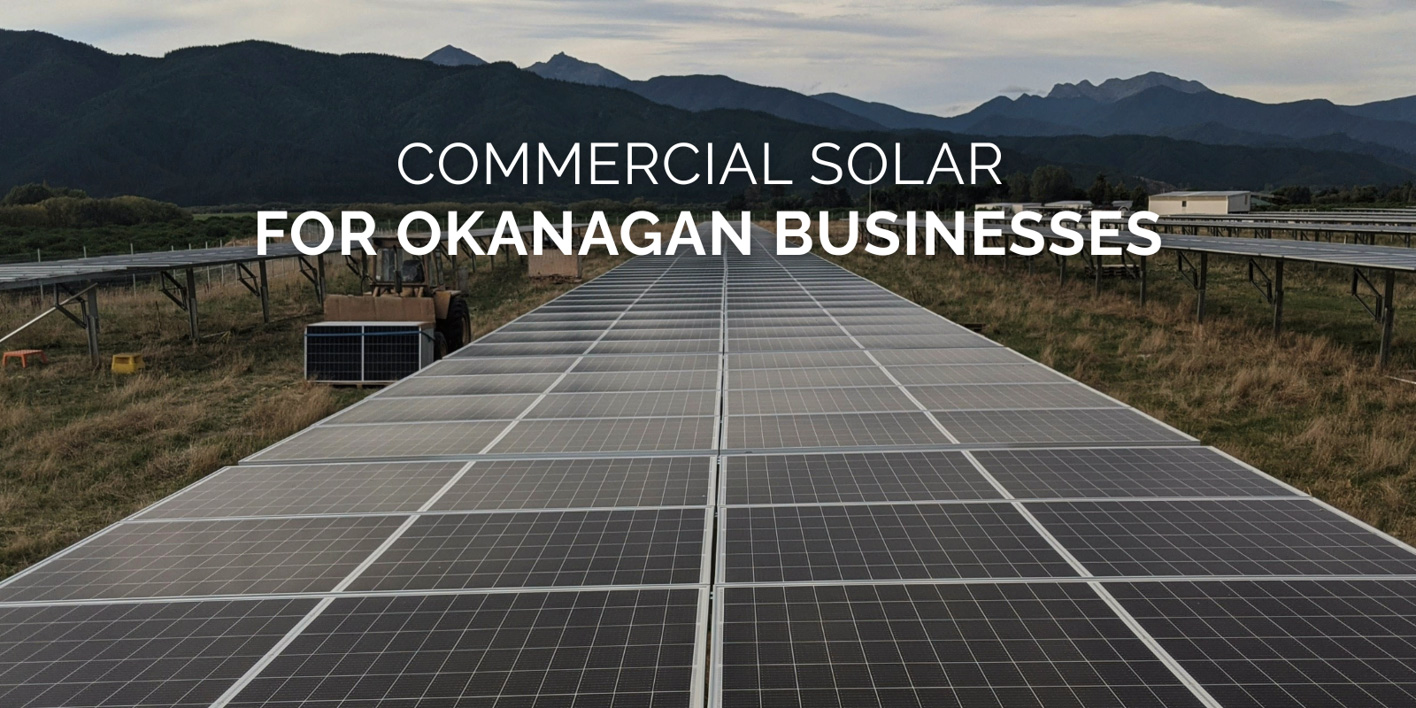
Drive through the Okanagan in July and you will pass a lot of flat commercial roofs baking in the sun: warehouses, wineries, packing houses, shopping plazas. Every one of those roofs collects hours of free sunshine a day, and most of them do nothing with it. Meanwhile, the businesses operating beneath those roofs are paying to keep their equipment running, their products cool, and their buildings comfortable. Commercial solar offers an opportunity to put that unused roof space to work, turning sunshine into electricity and helping businesses reduce their operating costs.
Why more businesses are looking at it
Mostly, it comes down to the power bill. Electricity is one of the few big costs a business can’t negotiate, and rates have a habit of creeping up. A solar system generates electricity right on your property which means you buy less from the utility and your bill gets easier to predict.
It also suits the Okanagan well. The heaviest electricity use for many local businesses is summer cooling and refrigeration, and that is exactly when panels produce the most. Sustainability is another consideration. Beyond reducing electricity costs, commercial solar is a visible investment in sustainability that can strengthen your company’s reputation with customers, employees, and the local community.
What actually happens
A good installer starts with your bills, not your roof. They will ask for about a year of them, because what matters is how much power you use and when. A winery running cold rooms all summer looks very different from a warehouse that is busy all year.
Then they look at the building. How much roof is there, and which way does it face? Do trees or neighbouring buildings cast shade? Is the roof strong enough to carry the panels and does it have plenty of life left? If it is nearly due for replacement, it is recommended to fix it first than to remove and reinstall the system later. If you have open land, panels can go on the ground instead, which is common on farms, vineyards and rural acreages.
From there, the installer designs a system to fit, then deals with the utility and the permits for you. Depending on where your property is, that utility might be BC Hydro, FortisBC or a city-owned one. At Solos, our experienced team takes care of the installation, with each stage handled by qualified people. We take pride in doing the work ourselves rather than relying on subcontractors. Once it is running, your building uses the solar power first. When the panels make more than you need, the extra goes back to the grid and you typically receive credits for it. When the sun is down, you draw from the grid like always.
What it costs, and how to think about it
No two projects cost the same. The price depends mostly on the size of the system, the equipment, the condition of your roof and whether your building’s electrical setup needs upgrading to handle it.
BC Hydro offers rebates for eligible commercial customers installing solar and battery storage. Small businesses and commercial buildings may qualify for up to $10,000 toward solar and another $10,000 toward battery storage. Higher rebates are available for eligible social housing and Indigenous communities. Eligibility depends on the property and project, so it’s worth discussing available incentives with our sales team before getting started.
It is worth looking past the price tag. A solar system sits on your building for decades, so the quality of the equipment, the warranties and how much power it will actually produce matter as much as the upfront number. A realistic estimate of your potential savings and return on investment should be based on your property’s specific energy consumption and solar potential. A reputable installer will take the time to assess these factors and clearly explain how the projected results are calculated.
Who should install it
When choosing a solar installer, it’s important to understand who will be carrying out the work and whether they have the qualifications and experience to complete it safely and professionally. Ask to see similar commercial jobs they have done, what the warranties cover and who you call once it is running. Our guide to solar certifications explains what credentials such as NABCEP actually mean and why these credentials are important.
At Solos, our own team handles everything from start to finish. We don’t subcontract, so you know who’s working on your property and who to contact if something needs attention down the road. We’re based in West Kelowna and proudly serve customers throughout the Okanagan and beyond.
Ready to Explore Solar for Your Property?
Whether you’re considering solar for your home, farm, or business, Solos Energy is here to help. Our team will assess your property’s solar potential, review your electricity consumption, and recommend a system tailored to your energy needs and goals.
Contact Solos Energy today to schedule your free solar consultation and take the first step toward generating your own clean energy.