Choosing a solar installer is about more than comparing the number of panels in each quote.
A solar system is a long-term investment, and the people designing and installing it matter just as much as the equipment you choose. One way to compare installers is to look at their certifications, licenses, and other professional credentials.
But what do those credentials actually mean?
Here’s what BC homeowners should know before choosing a solar installer.
Why Do Solar Certifications Matter?
Solar installation involves more than putting panels on a roof. A properly designed system needs to work with your home’s electrical system, meet safety requirements, connect correctly to the grid, and perform reliably for years.
Professional certifications help demonstrate that an installer has the training and knowledge needed to work with solar technology.
For example, NABCEP Board Certifications are earned by meeting eligibility requirements and passing a rigorous exam. NABCEP describes its certifications as a way to validate a professional’s knowledge, skills, and commitment to ongoing professional development.
For homeowners, that gives you another way to evaluate the experience and qualifications behind a solar company—not just the price of the quote.
What Is NABCEP Certification?
NABCEP stands for the North American Board of Certified Energy Practitioners. It is a professional certification organization focused on renewable energy.
NABCEP offers several credentials for solar professionals, including the PV Installation Professional (PVIP) certification. This certification covers the knowledge and skills involved in PV system design, installation, commissioning, operations, and maintenance.
NABCEP certification is a credential held by an individual professional. It is not the same thing as an electrical license or business license, and it does not replace any trade qualifications required in BC.
That distinction is important when you’re comparing solar companies.
A company may have experienced solar professionals on its team, but you’ll want to understand who actually holds the certification and who will be responsible for your installation.
What About Electrical Licensing?
Solar systems are electrical systems, so electrical qualifications matter too.
In BC, solar installers must meet the applicable trade certification and permitting requirements for the work being performed. BC Hydro and Fortis BC also require electrical permits as part of its self-generation and net metering process.
This is separate from a solar-specific certification such as NABCEP.
Think of it this way:
- Solar certification demonstrates solar-specific knowledge and experience.
- Electrical licensing demonstrates the qualifications required to perform electrical work.
You want an installer who understands both.
What Is the Home Performance Contractor Network?
If you’re looking at solar or battery rebates through BC Hydro, there’s another qualification you should know about: the Home Performance Contractor Network (HPCN).
As of June 1, 2026, solar and battery installations must be completed by an HPCN member to qualify for BC Hydro rebates. HPCN members have completed training related to BC Hydro’s self-generation and rebate programs and must meet requirements including WorkSafeBC compliance, business licensing, liability insurance, and standard warranties.
This doesn’t replace other required trade qualifications. Instead, it’s another part of the requirements homeowners should look for when choosing a contractor for a rebate-eligible project.
What Should You Look for When Comparing Solar Installers?
When you’re comparing quotes, don’t just look at the final price. Ask questions about who will actually design and install your system.
Look for the right qualifications
Ask whether the company has solar-specific certifications and whether the people working on your project hold the appropriate electrical qualifications.
Ask who will do the installation
Some solar companies use subcontractors to complete the electrical or installation work. It’s worth asking whether the company uses its own installation team or brings in outside contractors.
Check their experience
A company can have the right credentials and still be relatively inexperienced. Ask how long they’ve been installing solar, what types of systems they work with, and whether they have experience with homes similar to yours.
Make sure they understand the BC Hydro process
Your installer should understand the self-generation application, technical requirements, inspections, and other steps involved in connecting your system to the grid. BC Hydro recommends working with an HPCN member for rebate-eligible solar and battery projects.
Look beyond the panels
The equipment matters, but a good installer should also be able to explain why they’re recommending a particular system for your home, how it will perform, and what’s included in the installation and warranty.
Ask what the warranty covers, how long it lasts, and whether it covers the equipment, installation, or both. For example, a 25-year panel warranty doesn’t necessarily mean the installation itself is covered for 25 years.
Why Solos Energy?
At Solos Energy, we believe the people behind your solar system matter.
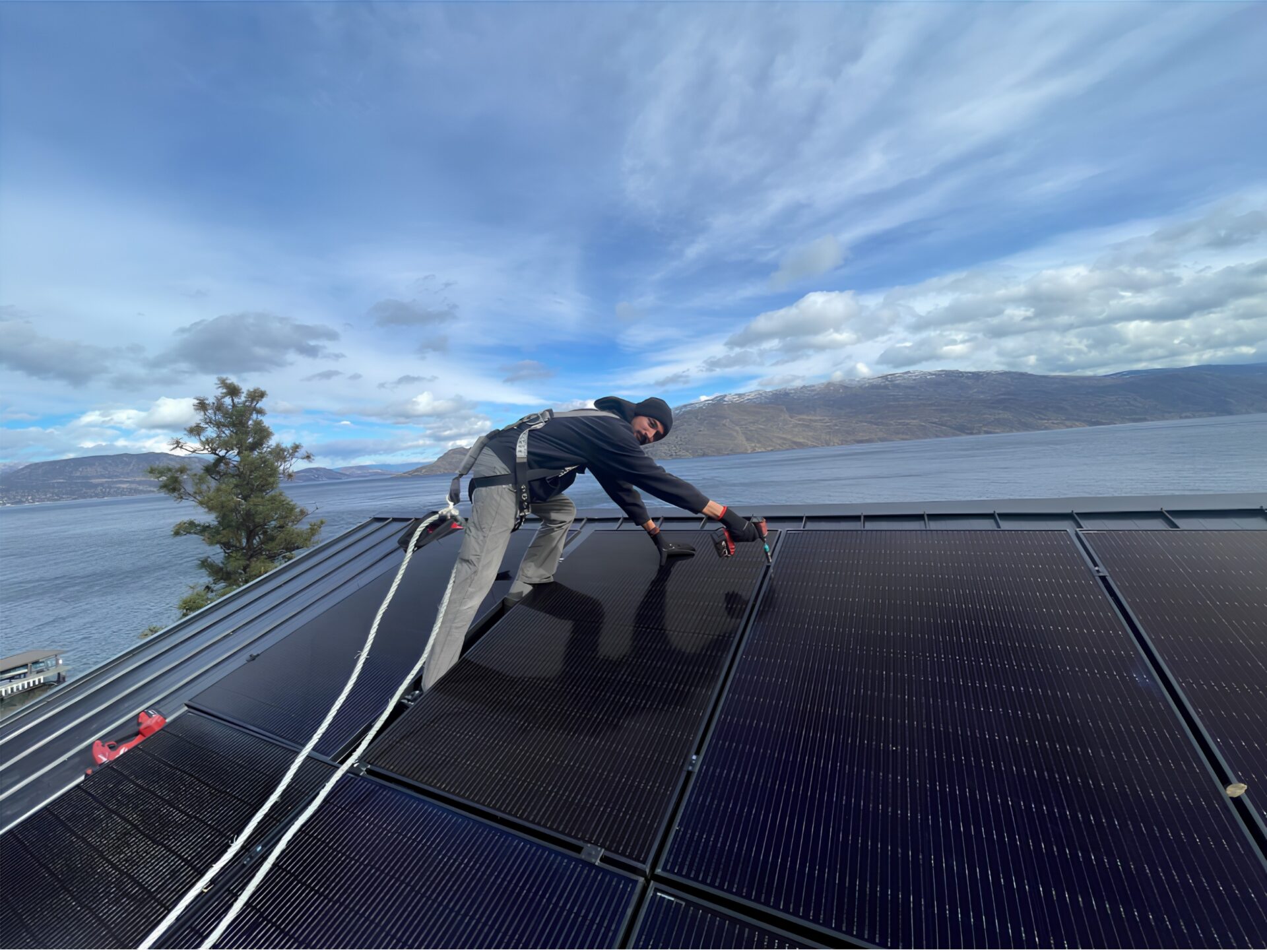
We’re proud to be the only NABCEP-credentialed installer in Kelowna, and every Solos installation is completed by our own certified, in-house electricians. We don’t ever subcontract our installations.
That means the team designing and installing your system understands the work from both a solar and electrical perspective.
We also help homeowners navigate and assist with the BC Hydro self-generation process and, where applicable, rebate requirements.
Ready to see what a properly credentialed installer can do for your home? Get a free, no-obligation quote from Solos Energy and find out how a NABCEP-certified, fully in-house team can design a system built around how you actually use energy.