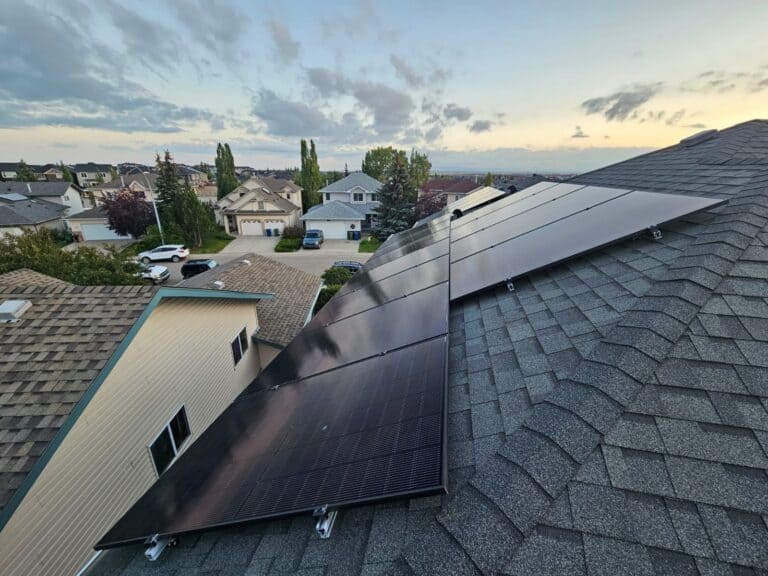
Thinking about going solar but not sure if your home is a good fit? You’re not alone. It’s one of the first questions we hear from homeowners in Alberta and BC — “Would solar even work on my roof?”
The good news is that most homes are suitable for solar in some way. But there are a few key factors that determine how much energy your system can produce and how much you’ll save. Let’s walk through them.
1. Roof direction and sunlight exposure
Solar panels perform best when they have access to consistent sunlight. In Western Canada, a south-facing roof usually delivers the highest total energy output over the year, but east- and west-facing roofs perform nearly as well — often producing up to 90% or more of the same output.
What matters most is that your panels get plenty of direct sunlight with minimal shading throughout the day. Even if your roof isn’t perfectly positioned, smart system design can still make solar a great fit.
2. Roof space and condition
A solar system needs enough clear, usable roof area to fit your panels. Most homes only need a portion of their roof, but it’s important that the surface is structurally sound and in good condition.
If your roof will need replacing soon, it’s best to take care of that before installing solar. That ensures your panels can remain in place long-term without interruption.
3. Your household electricity usage
Your current electricity use helps determine how much you can benefit from solar. Homes with steady or higher energy consumption often see stronger returns because they can offset more of their utility costs with self-generated power.
For most homeowners, the goal is to design a system that produces close to 100% of their annual usage — generating as much energy as they consume over the year, even if production varies season to season.
4. Local utility programs and incentives
Where you live plays a big role in how your solar system pays off.
In British Columbia, programs like the BC Hydro Self-Generation Program and commercial rebates make solar more accessible than ever.
In Alberta, rate options like the Solar Club let you earn higher credits for the power you export in summer and pay lower rates in winter.
Combining these programs with solar financing or loans (like the Vancity Planet Wise Renovation Loan for BC home owners) can dramatically reduce your upfront costs and help your system pay for itself faster.
5. Electrical capacity and upgrades
Your home’s electrical panel and service size determine how easily a solar system can be connected. Most modern homes already have the capacity for solar, but older systems may need minor upgrades.
During our assessment, we’ll check your panel, breaker space, and meter setup to make sure everything’s ready for a smooth, code-compliant installation.
6. Your goals and timeline
Some homeowners want to offset their bills. Others want energy independence or backup power. And some are focused on increasing property value.
Your goals shape the right design for your home — whether that means maximizing savings, preparing for battery storage, or simply starting small and expanding later.
So.. Is your home ready for solar?
If your roof gets good sunlight and you’re looking to lower your energy costs, solar could be a smart and practical choice for your home!
The next step is simple: schedule a free site assessment. We’ll evaluate your home’s potential, estimate your energy savings, and show you how solar could fit your lifestyle and budget.
Contact Solos Energy today to find out if your home is ready for solar — and see just how much you could save!